For a long while, I used the word “discernment” incorrectly. Does this resonate with you? I used to think it refers to the ability to make thoughtful decisions—to judge well or gain a better understanding of a situation. Now, however, I see that it points to something much deeper. Discernment in fact infuses every aspect of our relationship with God.
Discernment is not only our ability to hear God’s voice, but also to listen to Him. The Lord invites us to be obedient to His call so that we may answer Him and ultimately enter into an ever deeper love with Him. As early Church Father Origen tells us, “God doesn’t not want to impose the good, but wants free beings….No one but God knows what our soul has received from him, not even ourselves” (CCC 2847). Indeed, in order to discern God’s will for us, we must be able, have the liberty to, love Him. “We can only love in freedom, which is why the Lord created us free, free even to say no to Him” (Pope Francis, December 7, 2022). One may think, “I would never say no to God.” But is that so? Do we always accept our struggles as invitations to grow in friendship with God? And “between [our] trials,” so that we may grow and mature in our faith, do we surrender to the Holy Spirit who calls us to “discern” how to reorder ourselves to Him (CCC 2847)? Only if we are able to actually deny God can we whole-heartedly assent to His love for us, which is ever-present and always precedes our denial.
Discernment is greater than our ability to merely understand God. It is the awareness that in our relationship with Him, the Lord asks everything of us. How we listen and respond will ultimately determine the degree to which we discern well and love Him completely.
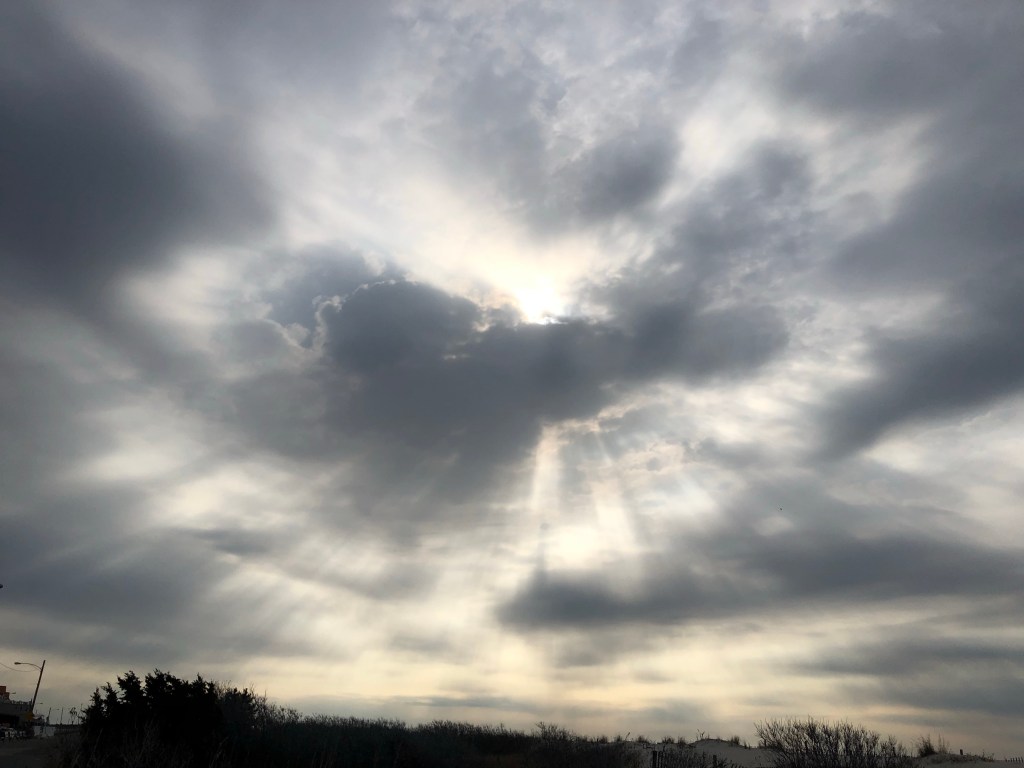
It is in the darkness that the light breaks through and pierces us with deeper knowing and wisdom.
In his podcast, Turning to the Mystics, James Finley discusses mystic St. John of the Cross and how the Dark Night of the Soul invites us to greater depth, clarity, and enlightenment:
[What we are seeking] is not the attainment of something, but rather the love that attains us in our inability to attain it, by taking it to itself and all the unresolved matters of our heart so unexplainably, deeper, deeper, ever deeper.
[Learning the way of the mystics] is not challenging because it’s academic. It’s challenging, because we’re not used to someone [or something] inviting us to such delicate levels of the interiority of our mind and heart, surrendered over to the presence of God.
We’re being called to the Dark Night, this deprivation of finite consolation….[in which] we might taste the infinite consolation of God, whether that’s happening to us, or it might not be happening to us just yet. But [we] know that the transformative artistry of this love, like the Tao…rings down to the lowest places giving life to everything.
The same transformative energy is present in all the modalities of our life….in any transformative process where you’ve been accessed by a love for some deep, deep thing that asks everything of you [in the same] way as artist, the poet, the musician, teacher, healer, [and] solitary. There’s something like an expansive depth that’s opened up to you. You lean into it and it’s calling you to itself, and you can follow it but not without a price, because you have to be willing to forgo and not get caught up in the pleasures and pastimes and diversions that would water down the fidelity to the transformations that you’re being called to. This is the refinement of experiential self-knowledge and love that St. John of the Cross and all the mystics are inviting us to. Let us be sensitive to these matters.
Transformation can come to us in many ways. We can discover it through a heightened awareness of goodness, beauty, and truth (known as the Three Transcendentals), which reveals the divinity in all things, or it can come through the Dark Night, when it seems none of these exist. This is “deprivation” at such an extreme that we can only experience chaos and emptiness.
Yet, it is in this darkness, as Finley explains, that we are invited to “lean into” what appears to be nothingness, for it is here that, perhaps unbeknownst to us, the Divine resides and calls us to something deeper. Unlike the light, which is captivating and moving and alluring in its brilliance, the darkness is at once more jarring and also more subtle. As we are reeling during a trauma or in suffering, it simultaneously calls us to “delicate levels of interiority of our mind and heart.” It asks us to submit to a “refinement of experiential self-knowledge and love.” This is consciousness at such a heightened awareness that most of us are unaware of it most of the time. It is only when the darkness overtakes us, severely limiting our senses and rational mind, that we are able to obtain a greater spiritual sensitivity.
In other words, in our confusion and upset, the Divine calls us in a deep way that “asks everything” of us. Only when we become aware that nothing in the physical world, no attachments, no material things, can calm or satisfy us, will we ultimately discern that Love alone will nourish us. This energy, which is God, oneness consciousness, Source, is eternal. The Divine is always inviting us to seek Her, dwell with Her, integrate Her into our hearts.
When the darkness comes to us, may we surrender to it. May we witness it as an invitation to something more. For only in our willingness to sit in and be surrounded by it will we discover that the light is actually in us.

 Sistering to Sophia