
In this video, Melanie explains the symptoms of narcissistic abuse.
Blog
Discovering Self-Care in the Dark
After only about five hours of sleep (periodically interrupted), I awoke at 4:30, tossing and turning, my mind and heart racing and my stomach in knots. As I sat with the feelings, there was no discernible underlying anxiety or worry. I just had floods of thoughts, from themes I wanted to write about to items to put on the to-do list. I became a sort of one-girl holistic act, tapping, using acupressure, meditating, and practicing Heart Math’s quick coherence technique.
After a while, some of this worked, but as I moved through all of this, the theme of self-care was very much on my mind.
Here’s what I wanted to share.
There is no doubt that I was experiencing stress this morning in the wee hours. My mind was behaving like my Doberman puppy who’s been inside too long; it was jumping all over the place without any coherence or rhythm or purposefulness. It was out of control. It was bothering me. It was frustrating me. And because of this lack of coherence, I felt so scattered and fearful and riddled with the flightiness and worry of lack mentality.
As I began to breathe into my heart space, my system calmed and I was able to put ideas and words together around the essential nature of self-care.
Here I was in a comfortable bedroom, the rain meditatively spattering the windows, Serenity diffusing on my bedside table, and I was stressed. What?
Yes, exactly. The anxiety was completely and entirely in my head, in my body, running through my cells as if I was preparing for a competitive athletic event or about to go on stage. NOTHING in my environment was taxing me; my mind was on fire. I felt like my inner self was threatening me.
So, as much as self-care is about taking time for ourselves, treating our bodies kindly, attending to our needs in form, what it is first and foremost is the ability to calm and soothe the inner self, the true self, the spiritual self. If we cannot find serenity in our own beings through whatever techniques we discover are the most effective for each of us, it doesn’t matter how many pedicures or massages we treat ourselves to, or even how many green smoothies we prepare, for that matter.
As Joe Dispenza (quoting Einstein, I think) states, the field creates the particle, the form; not the other way around. If our field, our attunement, our ability to allow the Divine to speak to us is out of alignment, we will be in a state of stress and by definition unable to self-soothe or care for ourselves or for anyone else.
It’s really that simple.
The idea is to stop searching outside ourselves (control over calendars, people, schedules, etc.) for serenity and purpose and rather go within. Always go within.
When we begin with the inner work and find alignment there, the outer world will always reflect it back to us.
This is what happened for me this morning. As I venture out into this cool rainy fall day (my favorite weather), I am intending to be grateful, joyful, and see the possibilities and opportunities in each present moment.
This is true self-care.
Drs. Oz and Hyman on How to Effectively Disrupt Healthcare and Activate Wellness
Two of my favorite men, candidly discussing how to inspire and culturally activate wellness.
The Essence of Illness and Wellness Begins and Ends with Vibration
In this episode, Abraham Hicks discusses the essence of health and illness. We are looking for answers “out there,” but the root of illness as well as the core of wellness always STARTS and ENDS with us.
Kate’s Favorite Crêpes

When we were at the beach this summer, the children and I found a few breakfast spots that prepared fresh crepes to order on top of large hot griddles and filled them with everything from chocolate and berries to bananas to whipped cream.
They were fine, but like most European-inspired dishes, especially confections, I found they were too large and too thick. Once the cook rolled them around the fillingand placed them in a paper cone, they were rather unwieldy. The layers were so thick that the berries and chocolate-hazelnut we ordered spilled out messily. The birds around us were happy, at least, with their chocolaty fruity snacks.
Once home, I told the kids that not only could we make gluten-free crepes here, but that we could also prepare a more delicate, French-like treat.
This recipe is inspired by traditional recipes, like those of renowned chef, Eric Ripert, but I have used almond flour in place of all-purpose flour, organic cage-free eggs, coconut sugar in place of whire sugar, plant-based milk (I like Ripple brand unsweetened vanilla, but use almond or cashew milk if you’d like) in place of whole dairy milk, and homemade ghee (you can buy it if you must) in place of melted whole butter.
Once you have combined the flour, eggs, sugar, and milk, you can make this batter your own. Whisk in orange liqueur, cinnamon, vanilla seeds scraped from the dried bean, or even some organic cocoa powder. If you desire a savory crepe, add half the sugar, hold the spices, vanilla, and citrus, and whisk in some finely chopped fresh herbs or even grated sheep’s milk cheese.
Traditionally, crepe batter requires a bit of a nap after the ingredients are combined. This allows the gluten to rest and the batter to thicken slightly. Because this batter didn’t contain gluten, however, resting isn’t necessary.
A word about cooking the crepes. A nonstick pan is essential here and it must be well heated with a bit of ghee to allow the batter to set properly once added to the pan. And regarding pouring the batter into the pan, pour just enough in the center of the pan, swirl to cover the base of the pan, and wait until it is set and moves easily before flipping.
It takes only a matter of minutes to create a lovely stack of thin petite rounds that you can then fill with just about anything you like.
No, these crepes aren’t perfectly French. But prepared with nourishing ingredients, I believe you will feel moved to declare, “merci, bien,” just the same.
Makes about 20 crepes
1/2 cup finely ground almond flour
2 tablespoons coconut sugar or granulated monk fruit
Pinch of Himalayan pink salt
2 large cage-free eggs
3/4 teaspoon vanilla extract
1 teaspoon grated lemon zest or 1 drop of lemon essential oil (optional)
1 teaspoon grated orange zest or 1 drop wild orange or tangerine essential oil (optional)
3 tablespoons melted and cooled ghee, plus more for cooking and serving
1/2 cup plant-based milk, plus more as needed
Cinnamon sugar (prepared with granulated monk fruit or Turbinado sugar) for serving (optional)
In a large measuring cup or medium bowl, whisk together the almond flour, sugar, salt, eggs, vanilla, lemon and orange zest or oils, if using, 3 tablespoons of ghee, and milk, whisking until smooth. The batter should be the consistency of heavy cream. Whisk in more milk, as needed.
Heat about 2 teaspoons of ghee in an 8-inch nonstick crepe pan or sauté pan over medium heat. Pour about 1/4 cup of batter into the center of the pan, and lift it off the heat to swirl the batter in the pan, covering the entire surface of the pan. (If you need to drizzle in additional batter to cover any holes, you can. Just don’t add too much; you want the crepes to be as thin as possible.)
Cook the crepe until the top surface appears nearly dry and it moves easily when you gently shake the pan, about 1 1/2 minutes.
Using a small offset spatula or your fingers, flip the crepe and cook another minute or so until it again moves easily in the pan and is light golden brown on the underside.
Slip the crepe onto a plate and repeat with the remaining batter, adding more ghee to the pan each time, and stacking the crepes on top of one another.
(If you don’t want to use all the batter, pout it into a glass jar, seal, and refrigerate fou up to 1 day. The batter will likely thicken overnight, so thin it with additional milk, as needed. If you have leftover crepes, set on a plate, wrap in plastic wrap, and store in the refrigerator for up to 1 day.
To serve, fold each crepe in half and then in half again to create a quarter moon. Drizzle with warm ghee and sprinkle with cinnamon sugar. Alternatively, spread with chocolate-hazelnut paste, almond butter, berries, or whatever you like.
Summer Kale with Toasted Sesame Seeds
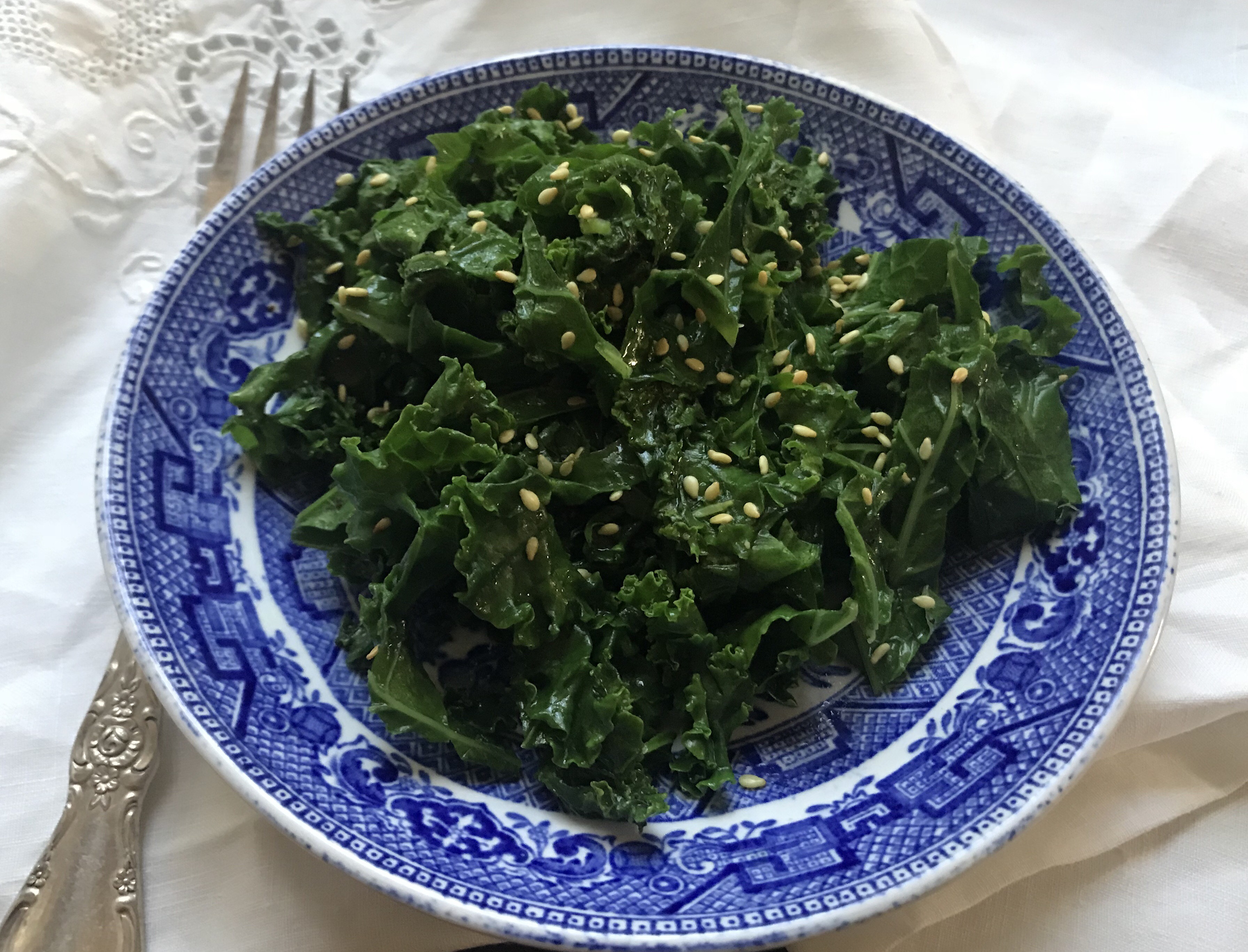
Here’s another quick, easy, and nourishing dish, featuring the cooling greens we require to disperse the heat in our systems in late summer.
Sliced kale is quickly sautéed in olive oil and then drizzled with sesame oil and speckled with toasted sesame seeds.
Serve this dish as a side to fish, chicken, or meat, or use it as a flavorful addition to a salad of roasted or grilled vegetables. It marries beautifully with tofu marinated in gluten-free soy sauce and fresh ginger, as well.
Makes about 2 cups
Heat 2 tablespoons of extra virgin olive oil in a large sauté pan over medium-high heat.
Add about 4 cups of sliced or chopped stemmed kale, season with pink or grey sea salt and freshly ground black pepper, and toss frequently until just tender and bright green.
Transfer to a serving bowl, drizzle with toasted sesame oil, and sprinkle with toasted sesame seeds.
Late-Summer “Yam” Greens Soup
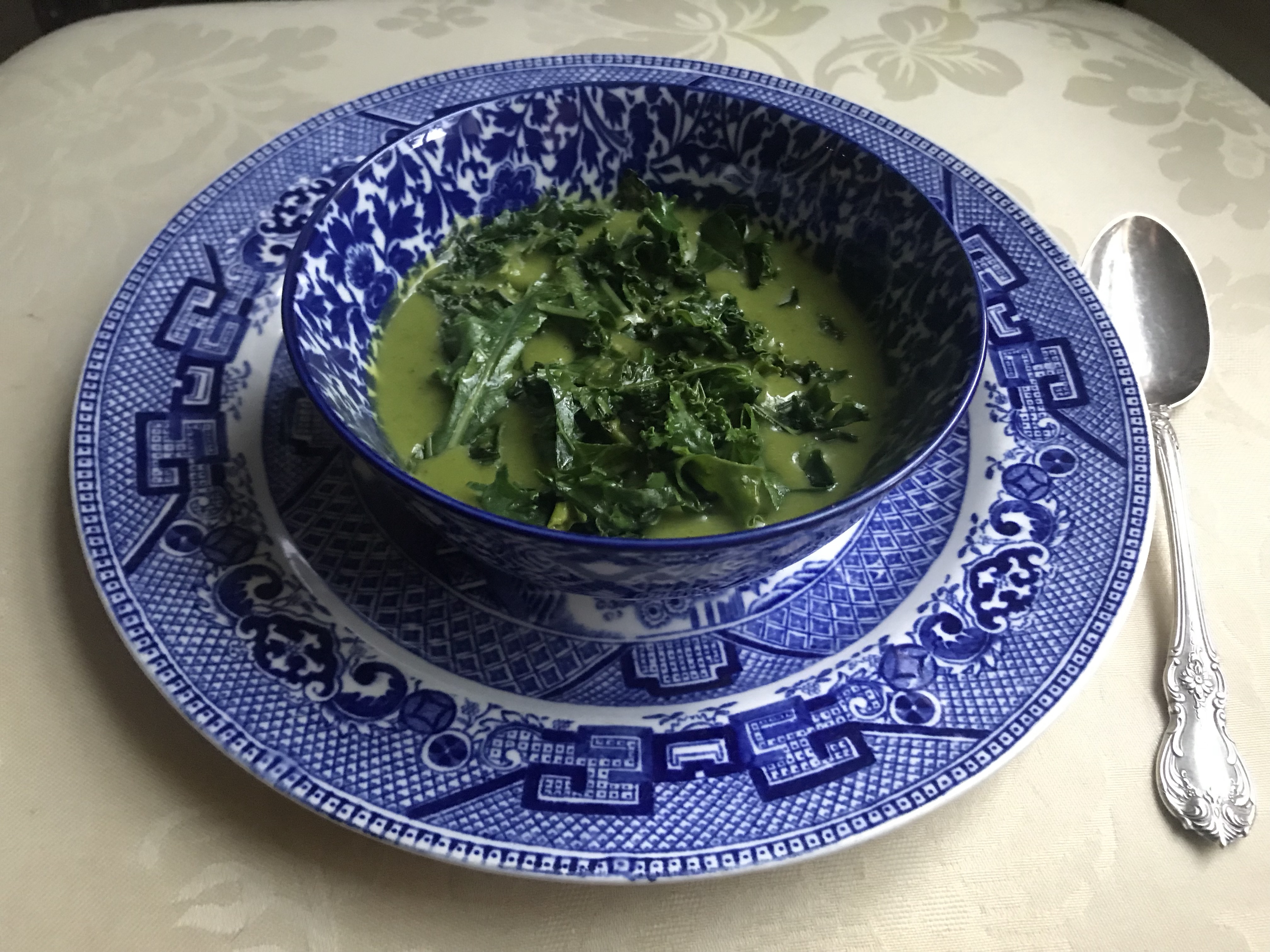
As the end of summer approaches, I am focusing on eating certain foods and preparing dishes that not only take advantage of seasonal produce, but that I know will also cool my body.
Ayurveda instructs us to take our cues from nature. During late summer, the leaves on trees begin transforming from cool-hued, fertile green to hot, vibrant drying reds, yellows, and oranges. The trees are releasing their stored heat in preparation for fall. The same activity is occurring in us. As heat collects and rises in our systems, it is incumbent that we eat cooling foods. They are easy on our slower summer digestion and prepare us for the cold weather ahead that will require our digestive fires to be at their strongest.
I’m not really sure what to call this soup. To call it a “greens” soup is rather unsexy and doesn’t do it justice. It’s more than a broccoli soup, though, since it’s prepared with several different types of green produce. Regardless of its name, this dish is cooling for the body and centering for the spirit. It is representative of vibrant green foods in general, all of which are related to, and particularly nourish, the heart chakra, hence the “yam” (the mantra for the heart chakra) term in the title.
Deanna Minich (www.deannaminich.com) writes about how green foods, full of phytonutrients, are particularly nourishing for the energy of the heart, the center of where we experience love. After all, our ability to align with source and to connect with the potential for unlimited abundance stems from this energy center. Emitting an electrical field ten times stronger than that of the brain, it is essential that we nourish the heart chakra in all ways, including with food.
Prepared with broccoli, spinach, kale, and peas, this soup nourishes so many parts of our being. It is cooling; it is centering; and because it represents loving kindness, compassion, forgiveness, gratitude, and our ability to receive (all associated with the heart chakra), it is perfect for a cleanse, a reset, or simply as a healthy addition to our summer repertoire.
Makes about 6 cups
Heat 2 tablespoons extra virgin olive oil in a medium saucepan over medium-high heat. Add 1 sliced small yellow onion and about 1 teaspoon of pink or grey sea salt and saute, stirring occasionally, until caramelized. Toss in the florets and chopped (peeled) stems of 1 small head of broccoli (3 to 4 cups). Season with additional salt and freshly ground black pepper, sprinkle in about 1 teaspoon of your favorite curry powder, and stir to combine with the onion. Add vegetable broth just to cover. (Alternatively, add water and toss in your favorite vegetable bouillon cube. My favorite is Rapunzel brand, Vegetable Bouillon with sea salt, available at Whole Foods and Wegman’s. For this preparation, I start with about ½ a cube and add more, as necessary.) Bring to a simmer and cook just until the broccoli is tender and still bright green.
In the meantime, add a generous handful of fresh spinach and about ½ cup of organic frozen peas to the container of a blender or Vitamix. When the broccoli is ready, pour the entire contents of the pan into the blender and blend until very smooth, adding additional water or broth and salt, as needed.
Serve as is, with a drizzle of olive oil, or with some sauteed spinach or kale.
Store in a lidded glass jar in the refrigerator for up to 4 days.
Banana Bread for a New Day

Who doesn’t like banana bread? With its caramelized crust and moist, sweet crumb, it is so comforting and delicious. Unfortunately, however, most tasty recipes not only are prepared with regular white flour, but also with lots of white sugar. These ingredients contribute to the texture and flavor we all have come to love and crave, but they certainly create more of a cake than a bread and one which is loaded with stuff we really shouldn’t be eating regularly.
This revised recipe is based upon one of my traditional favorites, but I have chosen the ingredients carefully to create a bread that is still delicious, but also gluten free and much healthier. Firstly, I have replaced all-purpose white flour with a combination of gluten-free spelt and almond flours. When combined, they create a bread with a tight and moist crumb and fine texture.
Next I swapped coconut sugar and granulated monkfruit for white sugar. Again, sugar is crucial to adding moisture and satisfying texture to cakes and breads, so substituting for it can be tricky. Coconut sugar does a great job here, though, as it not only maintains the texture we love, but it also contributes a modest caramel-like essence to the bread. Monkfruit adds another layer of sweetness and subtle caramel flavor, but, really, if your bananas are super ripe, you probably don’t even need it.
As for the eggs and butter, they remain true to the original recipe, although I have chosen organic free-range and grass-fed varieties. Obviously, they are so flavorful and pure in their own right that they can only add integrity to the final product. (If you choose to substitute flax meal for the eggs, you certainly can, but I have found that this bread is much more dense and moist. It’s still yummy, but the flax just doesn’t give the bread the cake-like texture we expect.)
Lastly, I have tossed in raw cacao nibs in place of chocolate chips and added a bit of lemon in the form of essential oil. You don’t have to add any chocolate at all, but my kids happen to like it in their banana bread. If you prefer chips, there are several very good dairy- and sugar-free brands that are widely available in most markets. The cacao nibs, though, which retain their natural bitter chocolate essence, are a pleasant addition to this recipe. They remain a bit firm in the final bread, and their bitterness contrasts satisfyingly with the sweet bread. As for the lemon, I chose to incorporate a few drops of my favorite lemon essential oil by doTerra. (You can also add some fresh lemon zest, but it’s fun to use oils in this application.) This oil is incredibly concentrated and aromatic and contributes a brightness that beautifully complements the sweetness of the bananas and the bitterness of the chocolate.
This recipe comes together quickly and the bread stores well, either in the refrigerator for up to a week or in the freezer for up to one month. I call here for baking it in a nine-by-two-inch cake pan, but play with the shape if you wish. Make one large loaf (in a 9 ½-by5 ½-by-3-inch pan), muffins, or smaller rounds or loaves, of course reducing the baking time if you bake it in smaller vessels.
This bread is delicious anytime of the day for snacking or dessert and of course would be a happy addition to a school lunch box.
Makes one 9-inch round bread
In the bowl of an electric mixer fitted with the paddle attachment, combine 1 cup of room-temperature unsalted butter with 1 cup of coconut sugar and 2 tablespoons of granulated monkfruit and mix on medium-high speed until fluffy, stopping occasionally to scrape the sides of the bowl.
Incorporate 4 eggs, one at a time, again stopping occasionally to scrape the sides of the bowl. Add 3 mashed ripe bananas, 1 teaspoon of vanilla extract, and 4 drops of doTerra Lemon Oil (or 1 teaspoon fresh lemon zest) and continue mixing. (If the batter appears a little “broken” at this point, it’s okay.)
Whisk together 1 ½ cups of spelt flour, 1 cup of fine almond flour, 1 ½ teaspoons baking powder, and ½ teaspoon sea salt in a medium bowl. Reduce the mixing speed and gradually incorporate the dry ingredients into the batter, stopping to scrape the sides of the bowl. Toss in 1/3 cup cacao nibs and mix until just combined.
Pour the batter into a buttered and parchment-lined 9-by-2-inch round cake pan. Bake at 350 degrees F. (or 325 degrees F. in a convection oven) until it is well risen, dark golden brown, fragrant, and a wooden skewer inserted in the center comes out clean, about 45 minutes.
Remove from the oven and set aside to cool slightly before turning out onto a wire rack to cool completely. Wrap in plastic wrap and store in a re-sealable bag in the refrigerator for up to 1 week or in the freezer for up to 1 month.
The History of the World is Written on Our Hearts

Monsieur de Chardin, you continue to invite my consciousness to expand.
This quotation reminds me of a conversation I listened to today between John Douillard and David Frawley. They were discussing what many of us have come to understand according to scientific evidence—that we carry memories in our very cells of past generations. No longer can we say man is in any way an island. Not only are we energetically and spiritually connected to one another in an intricate mystical web, but our ancestors are also literally infused into our very beings. Not just their DNA, but their memories and experiences, as well. We carry “the whole history of the world” as much as we are shaping it with every breath.
Windows, Trees, and Expansion
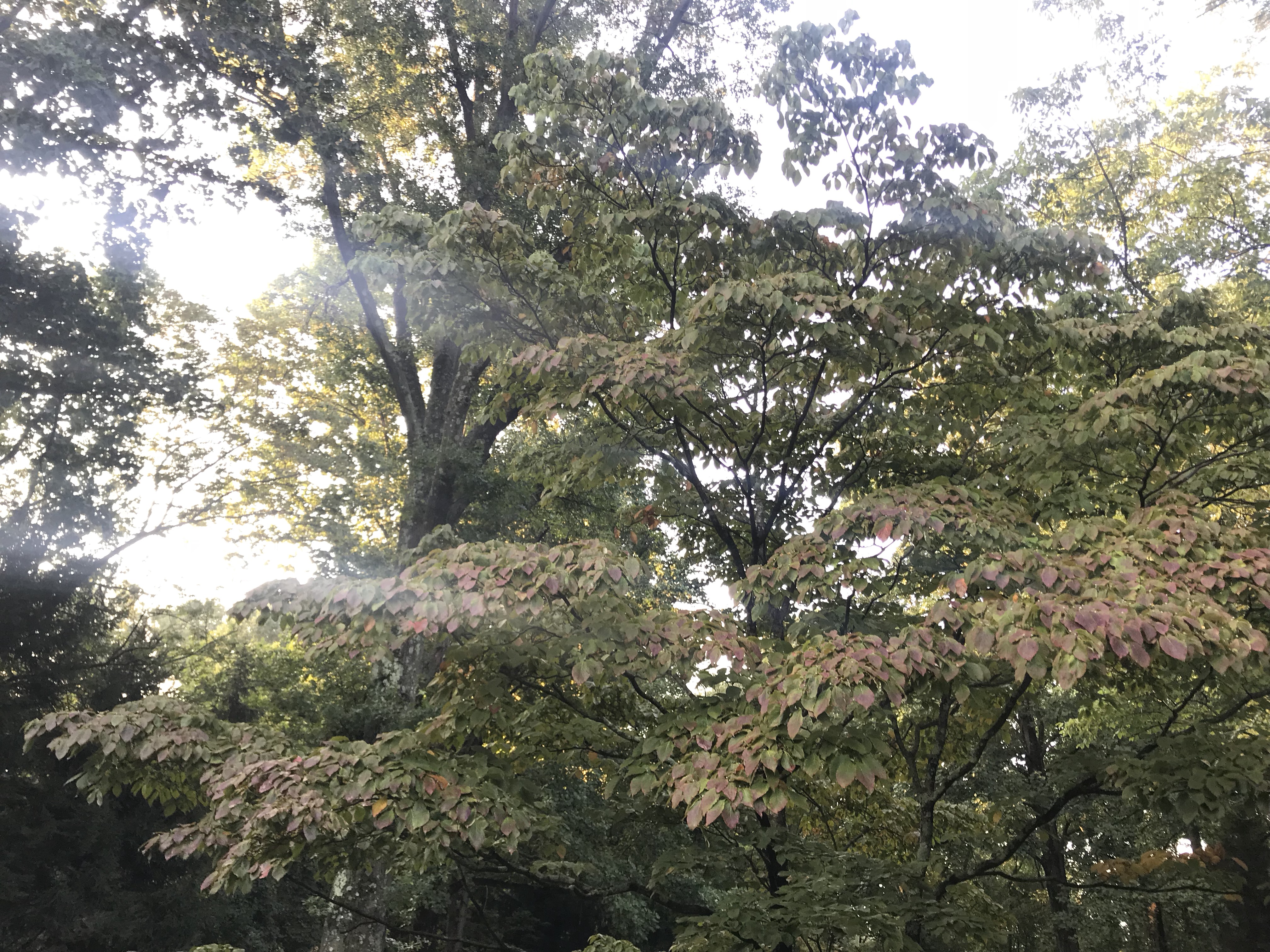
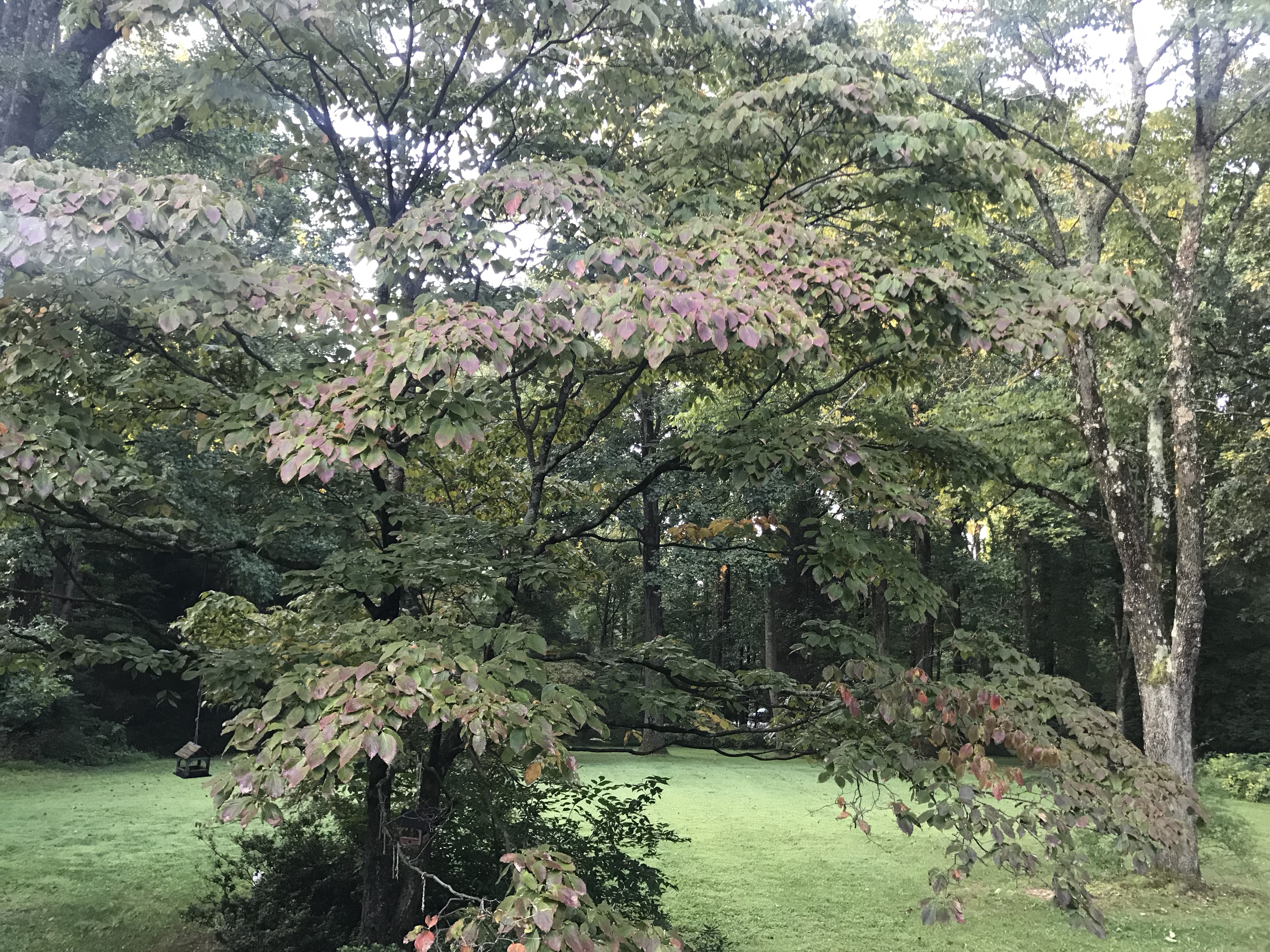
I felt it this morning. Did you?
I walked into my bathroom at 6:45 AM and the room was cool. The large window over my tub looks out over the backyard, and I noticed the dogwoods, whose green leaves have appeared dipped around the edges ever so lightly in red during the past couple of weeks, are now more broadly brushed with color.
Fall is a minute away. School has already started for many kids in our area. And all this puts me in mind once again of how life unfolds according to its natural intelligence—its own divine right timing.
The trees don’t think about and work hard at transforming. The air doesn’t need instruction about cooling. The acorns that are now strewn about the yard—those amazingly beautiful pieces of petite natural sculpture—decide on their on where to land and how grow into the likenesses of the massive trees that birthed them.
The ebbing and flowing of nature comforts and invigorates me. It reminds me that expansion occurs according to its own divine right timing. We are not meant to push and fight and struggle and grind our way to abundance and evolution. We are to get quiet, enter alignment, and float effortlessly into wholeness.
This is the way. This is the journey. This is life, this is our soul, ever unfolding, ever expanding, ever becoming.
 Sistering to Sophia